Updated November 2026.
Quick answer: piano apps are great for getting started, staying motivated, and learning notes and rhythm with instant feedback. They can’t see your hands, so they miss posture, tension and technique, and they judge which notes you played more than how you played them. Use an app every day and add a few lessons with a teacher.
How piano apps work
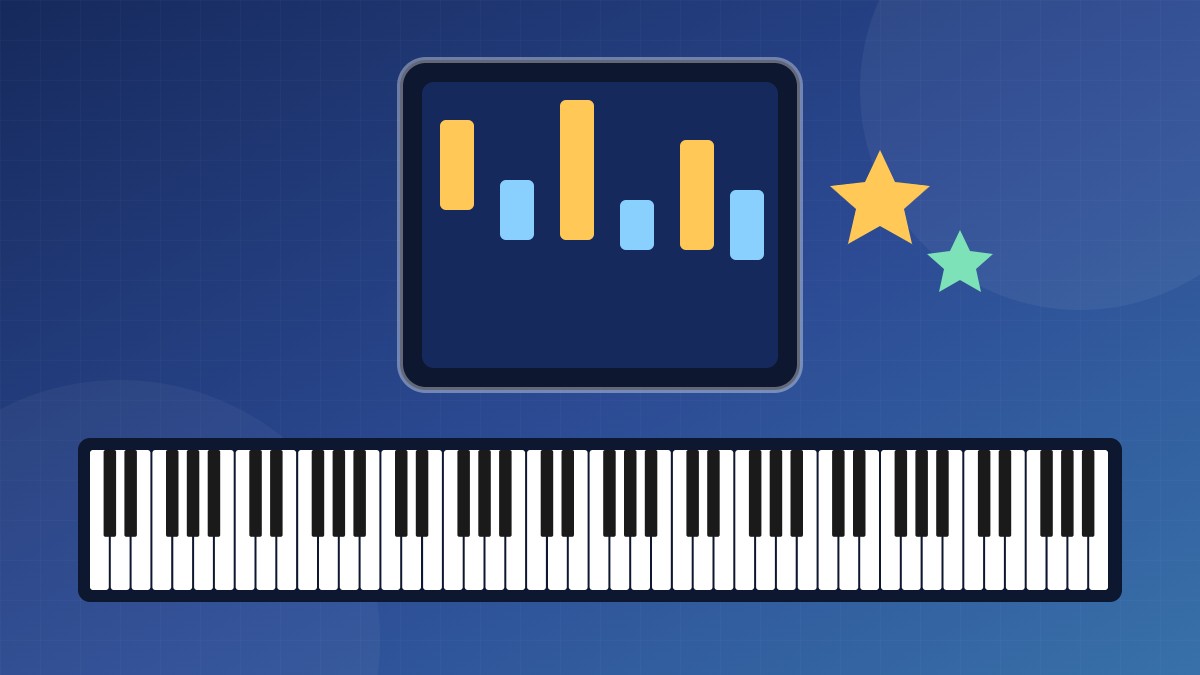
The app shows you what to play, as sheet music, falling notes or a video of hands, and then listens. It hears you through the device’s microphone (works with any piano) or a MIDI connection (more accurate, digital pianos only). It then scores your notes and timing and moves you on.
Popular apps at a glance
| App | Style | Good for |
|---|---|---|
| Simply Piano | Game-like lessons built around songs | Absolute beginners who need motivation |
| Flowkey | Video of a pianist’s hands with the sheet music | Learning specific songs by watching |
| Skoove | Structured courses with feedback | A course-like path through the basics |
| Playground Sessions | Video lessons and song practice | Pop songs and rhythm skills |
| Piano Marvel | Method and sight-reading practice | Building real note-reading skills |
Most are subscriptions with a free trial, so try two or three before you commit.
What apps do well
- Instant feedback on wrong notes and rhythm.
- Motivation through songs you know, streaks and short lessons.
- Note reading, if the app uses sheet music rather than only falling notes.
- Flexibility: practise any time, at your own pace.
What apps miss
- Posture and tension. Bad habits can cause pain and are hard to undo later.
- Technique: fingering choices, wrist movement, pedalling.
- Musical expression: phrasing, dynamics and tone.
- Reading, if you only follow falling notes. It’s quick for learning songs but doesn’t teach you to read music.
Getting the most from an app
- Connect with a cable if you have a digital piano. See how to connect a digital piano.
- Practise a little every day. Our 20-minute routine works alongside any app.
- Slow down when the app flags the same mistake twice.
- Book a teacher now and then to check your posture and hands. Even a lesson a month helps.
- Move on to sheet music as soon as the app offers it.
FAQ
Can I learn piano with only an app?
You can learn to play songs. For good technique and expressive playing, a teacher makes a big difference.
Do apps work with an acoustic piano?
Yes, through the microphone. Feedback is less precise than over MIDI, especially in noisy rooms.
Which app is best?
The one you’ll use every day. Try the free trials and see which style keeps you coming back.