For adult beginners. Updated November 2026.
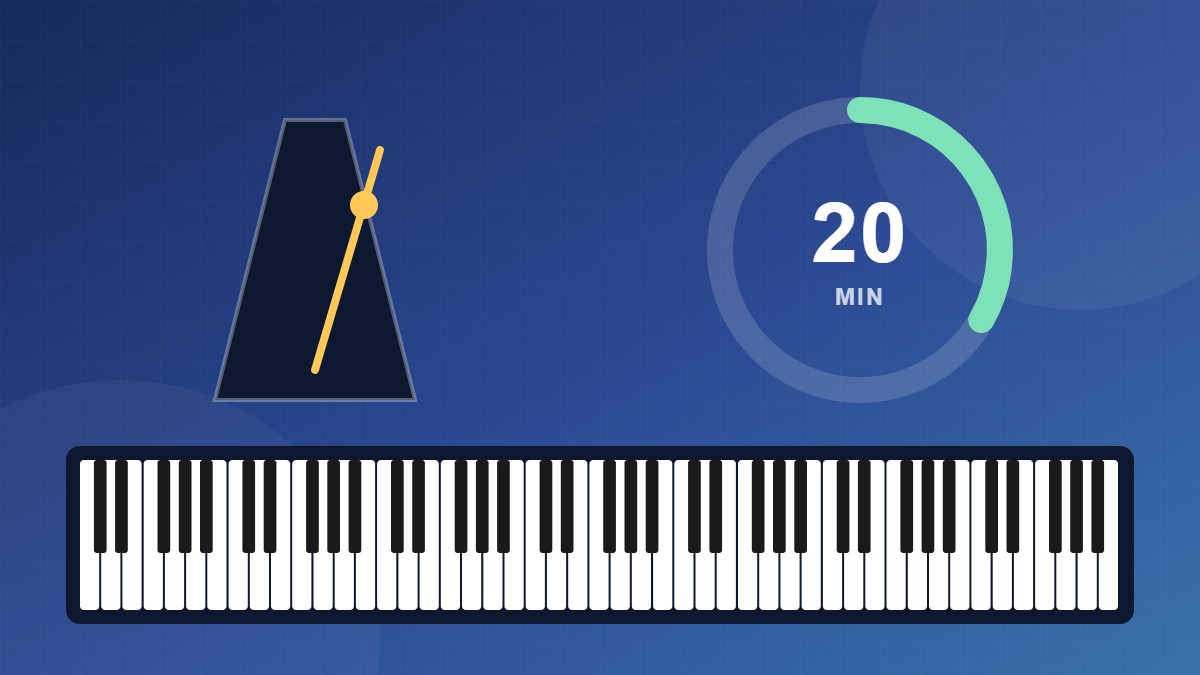
Quick answer: practise 20 minutes a day in four parts:
- Warm-up, 3 minutes: slow five-finger patterns.
- Technique, 5 minutes: one scale, hands separately, then together.
- Your piece, 10 minutes: a few bars at a time, slowly, with a metronome.
- Play for fun, 2 minutes: something you already know.
Twenty minutes every day beats two hours once a week.
Why short, daily practice works
Learning piano is mostly training your hands and brain to work together, and that improves with frequent repetition and rest in between. Short daily sessions are also easier to keep up than long ones, so you actually do them.
The routine
| Time | What | How |
|---|---|---|
| 0–3 min | Warm-up | Five-finger patterns (C to G), each hand alone, slow and relaxed. |
| 3–8 min | Technique | One scale per week. Hands separately, then together. Metronome at a slow tempo, such as 60. |
| 8–18 min | Your piece | Work on 2–4 bars at a time. Start with the hardest bars, not from the top. |
| 18–20 min | For fun | Play anything you enjoy. End on a good note. |
How to work on your piece
- Pick a small section, two to four bars.
- Hands separately until each hand is comfortable.
- Hands together, slowly. Slow enough that you don’t make mistakes.
- Speed up gradually. When you play it cleanly three times in a row, raise the metronome by 4–5 beats per minute.
- Join it to the next section by overlapping a bar on each side.
Fixing mistakes that keep coming back
- Same mistake twice? Slow down. Playing it wrong at speed teaches your fingers the mistake.
- Don’t restart from the beginning after each slip. Loop the bar that went wrong.
- Count out loud. It fixes most rhythm problems.
- Record yourself once a week. You’ll hear things you miss while playing.
Quick posture check
- Bench height: forearms roughly level with the keys.
- Sit on the front half of the bench, feet flat.
- Shoulders loose, fingers gently curved, wrists level.
- If anything hurts, stop. Pain is a sign to change something, not to push through.
What to practise on
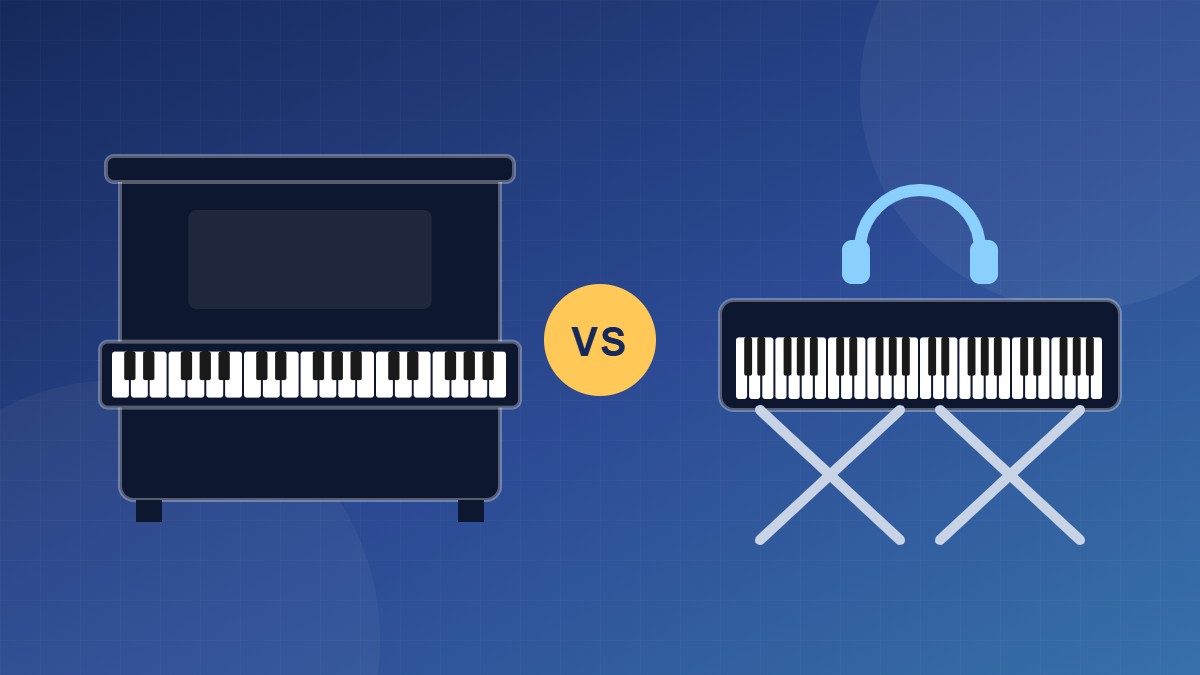
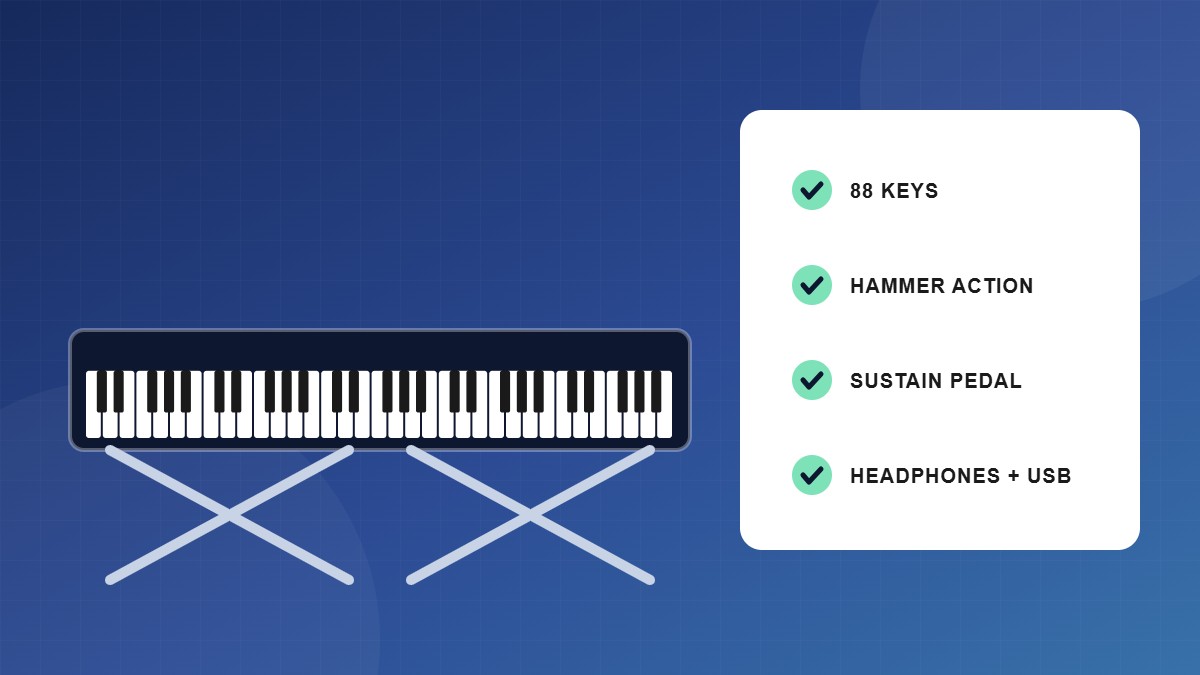
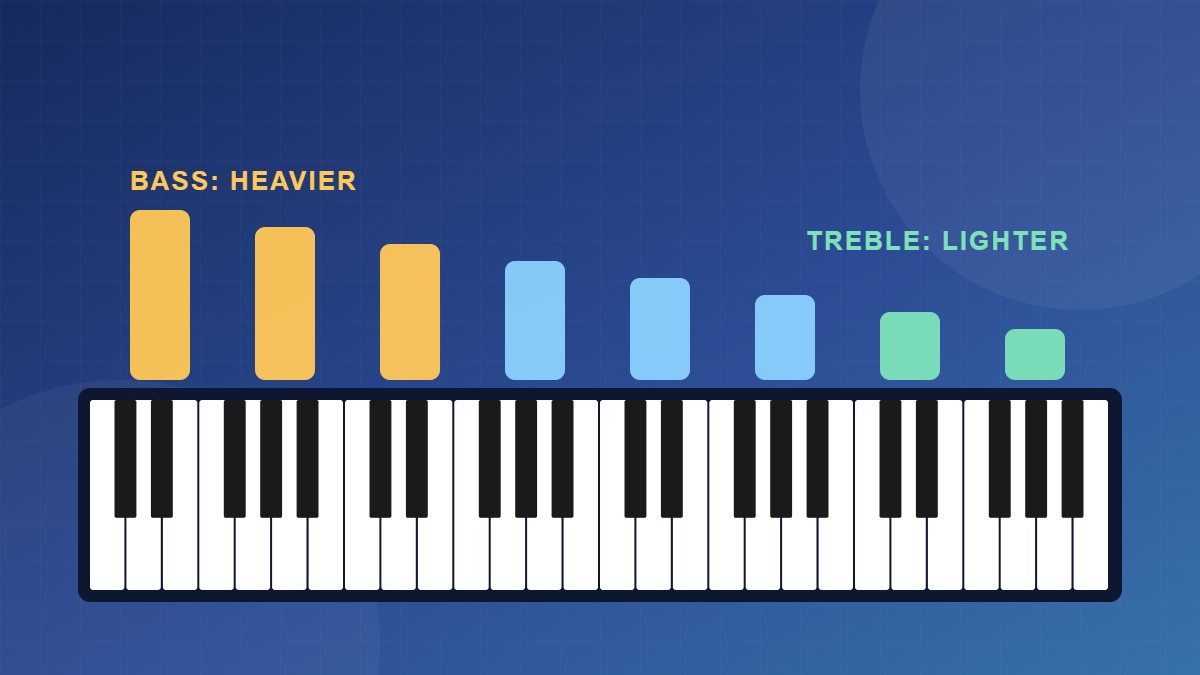
An acoustic piano or a digital piano with 88 weighted, touch-sensitive keys and a sustain pedal is ideal. A 61-key keyboard with light keys is fine to start on, but the jump to a real piano feels harder later. If you’re using a digital piano, you can also connect it to your computer for learning apps and recording.
FAQ
Is 20 minutes a day enough?
Yes, to start. Add a second short session later in the day when you want faster progress.
How soon will I play a real song?
It varies. A simple piece with both hands is a realistic goal for your first couple of months of daily practice.
Do I need a teacher?
Not to start. A few lessons are worth it if you’re stuck on the same problem for weeks, feel tension or pain, or want to read music faster.