Updated November 2026. Prices are rough US figures and vary by country, area and year.
Quick answer:
- Buy a digital piano if your budget is under about $1,000, you live in a flat or need to practise with headphones, or you want to record and use apps. It never needs tuning.
- Buy an acoustic piano if you’re serious about classical study, you want the real touch and sound, and you have the space and budget for tuning once or twice a year.
- Not sure? A good digital piano with 88 weighted keys is a safe first step. Many players add an acoustic later.
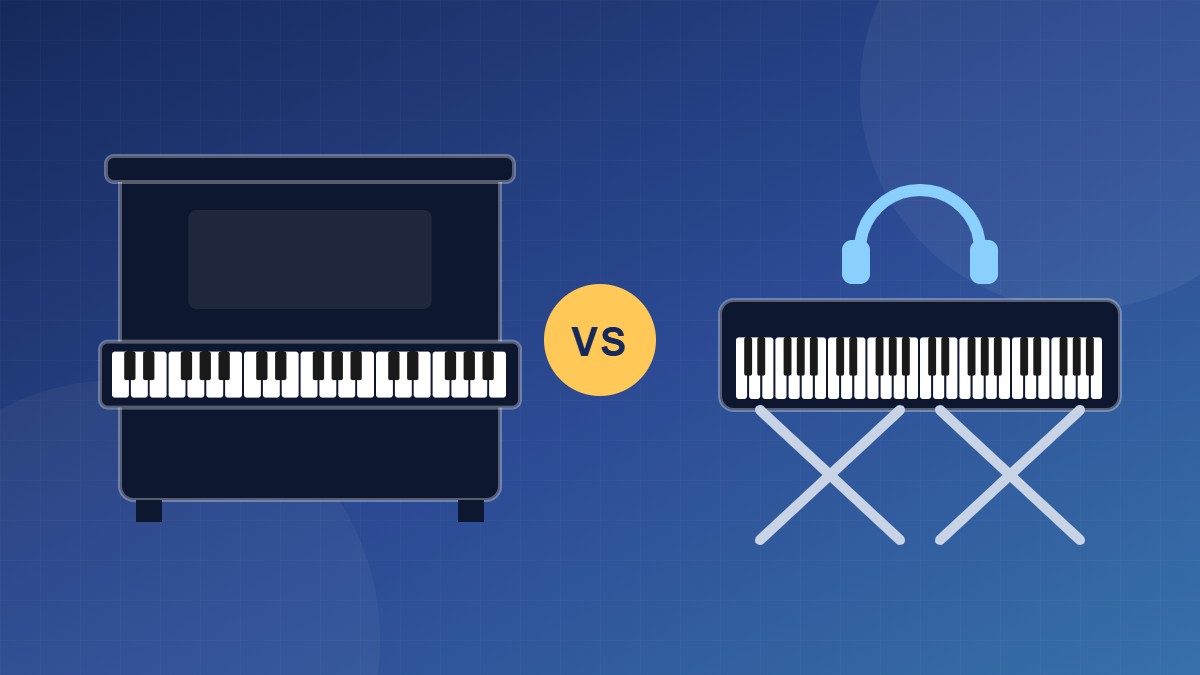
Side by side
| Digital piano | Acoustic piano | |
|---|---|---|
| Sound | Recorded or modelled piano. Good models sound very convincing through headphones. | Real strings and soundboard. Fuller, and it responds to every nuance. |
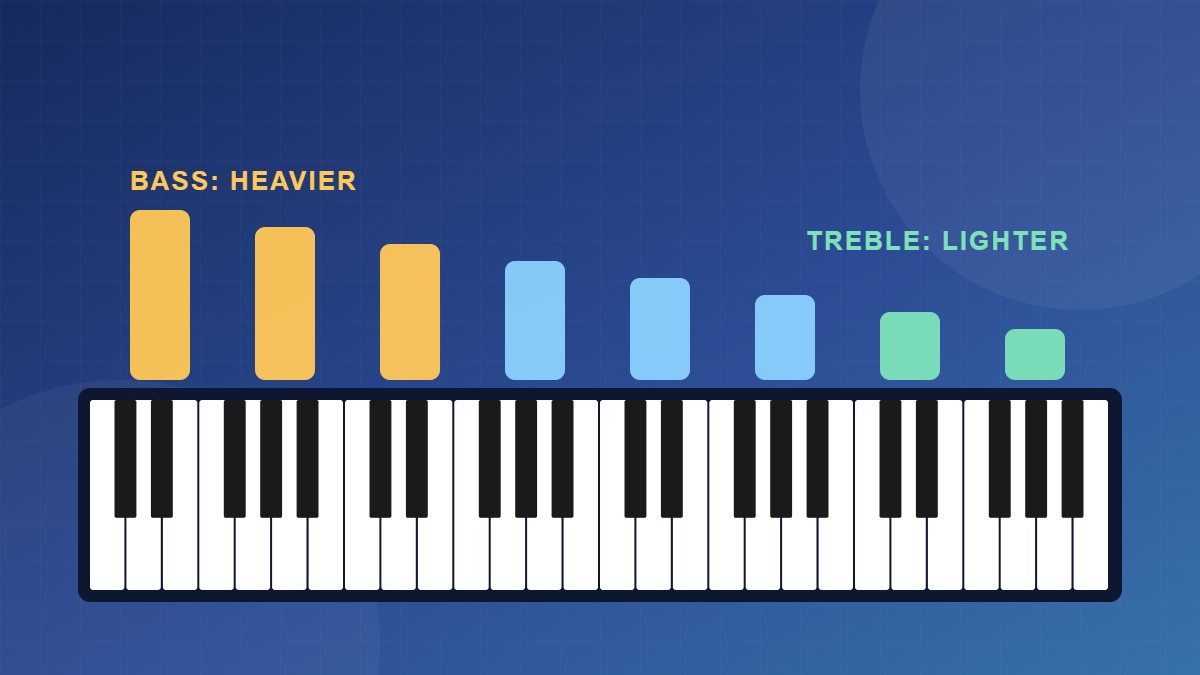
| Touch | Weighted keys imitate a piano. Better models feel close. | The real thing. Every acoustic feels a little different. |
| Volume | Adjustable, with headphones | Loud. Neighbours will hear it. |
| Upkeep | None | Tuning 1–2 times a year (about $100–$225 each in the US) |
| Size and weight | Portable models weigh around 12 kg (25 lb) | Uprights weigh roughly 135–360 kg (300–800 lb) |
| Price | Good beginner models from about $450–$600 | Used uprights vary hugely; new pianos usually start in the thousands |
| Extras | Headphones, recording, MIDI, learning apps | None built in, though silent systems can be fitted |
| Lifespan and resale | Electronics; usually replaced sooner and resale drops | A well-kept piano lasts decades and holds value better |
Who should buy a digital piano
- Beginners who want to find out if piano is for them without a big outlay.
- Anyone in a flat, a shared house, or with a baby asleep at 9 pm.
- People who want to record, use learning apps or make music on a computer. See how to connect a digital piano to your PC.
- Anyone who moves home often.
Who should buy an acoustic piano
- Students working toward exams or classical repertoire, where control of soft playing and pedalling matters.
- Players who love the sound and feel and practise every day.
- Homes with space, a stable indoor climate, and a budget for regular tuning.
An acoustic piano in poor condition is worse to learn on than a good digital one. If you buy used, read our used piano checklist first.
The middle ground: hybrid pianos
Hybrid pianos combine a real or near-real hammer action with digital sound and headphones. Examples include Yamaha AvantGrand, Kawai NOVUS and Casio’s Grand Hybrid models. They cost more than most digital pianos, but give you acoustic-like touch with quiet practice.
Count the total cost, not just the price tag
For an acoustic piano, add delivery (usually a few hundred dollars with professional movers), tuning once or twice a year, and the occasional repair. A “free” piano can still cost hundreds to move and bring up to pitch. For a digital piano, add a stand, a proper piano-style sustain pedal if one isn’t included, a bench and headphones.
FAQ
Can I learn piano properly on a digital piano?
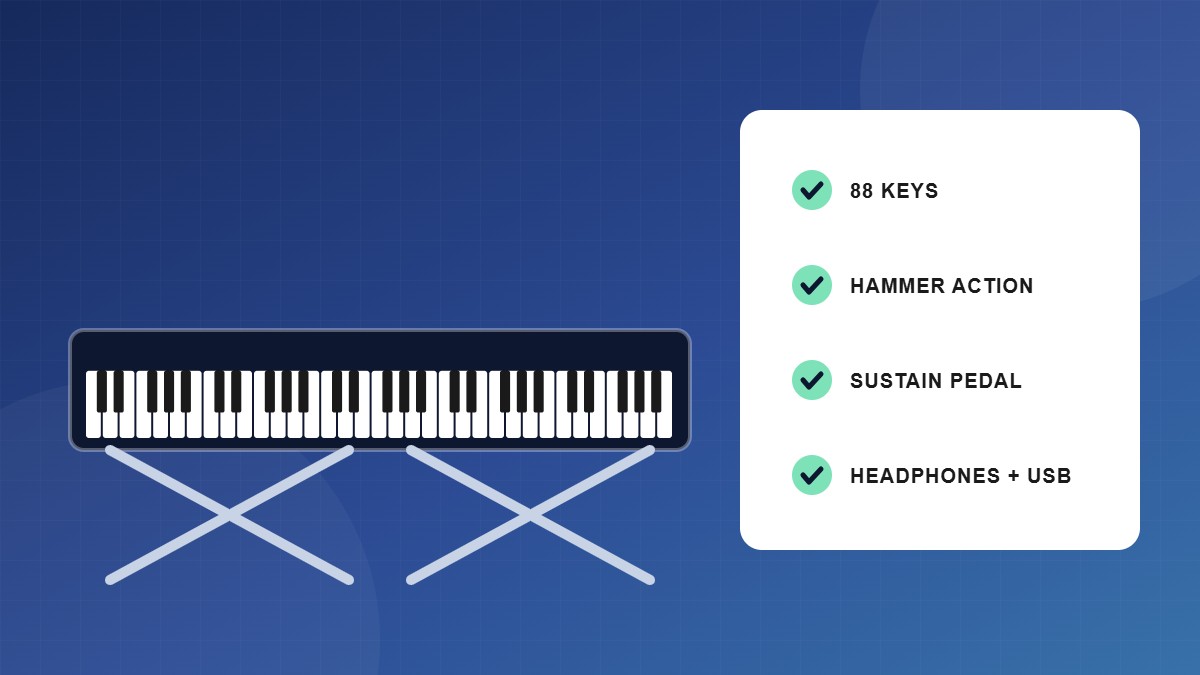
Yes, as long as it has 88 fully weighted, touch-sensitive keys and a sustain pedal. Many teachers are happy with that for the first years.
Will a digital piano hold me back later?
At an advanced level, the touch and tone control of a good acoustic help. That’s a problem for later, and a good reason to upgrade then.
Is a free acoustic piano a good deal?
Sometimes. Have a technician check it before you pay to move it.